Daaman

Summer 2026 WFH Survival Guide

Pakistan’s summer of 2026 is already brutal, temperatures hitting 43°C in Karachi, 47°C in Multan, and 44°C in Lahore. And if you’re working remotely, freelancing, or running a business from home, this heat is your biggest productivity enemy right now. Trendhub Pakistan Here’s the real problem: Research shows that people without air conditioning experience a 13% drop in mental throughput during heatwaves. Studies also confirm that productivity peaks at around 22°C and starts dropping off noticeably once temperatures climb past 25–26°C. In Pakistan, we’re working in double that. PLOSNPR hese 6 tips are practical, local, and based on what actually works here. 1. Shift Your Deep Work to 5–10 AM Pakistani cities are 8–12°C cooler in the early morning hours. That window between 5 AM and 10 AM is your most valuable working time all day. Schedule your hardest tasks — writing, coding, client calls, anything that requires focus — in those hours. Save emails, admin, and social media for the afternoon. This isn’t just about comfort. Starting your work early helps you finish important tasks before the heat increases — even a small shift in your start time makes a measurable difference. Pune Pulse 2. Cool Your Room, Not Just Your Body Closing your curtains from 9 AM onwards blocks direct sunlight and can drop indoor temperature by up to 6°C on its own. But the real game-changer is an evaporative (water) air cooler, especially if you’re dealing with load-shedding. Inverter-compatible evaporative air coolers are designed for reliable performance even during load-shedding, with low noise operation and energy-efficient cooling. Room air cooler prices in Pakistan start around Rs. 15,000–24,000 for portable models, with average range units from Super Asia, Royal, and Haier costing Rs. 20,000–32,000. 3. Save Your Laptop From Overheating Too When room temperature is 44°C, your laptop is running 15–20°C hotter than normal. That means thermal throttling, slowdowns, random crashes — all mid-deadline. A cooling pad lifts airflow under the device and drops temperatures by 5–10°C. A good quality aluminum laptop stand costs between Rs. 2,500 and Rs. 4,500 in 2026, and a laptop stand can drop temps by 5–10 degrees Laptop cooling pads on DarazCooler Master & Thermaltake options at W11Stop 4. Hydrate Like It’s Part of Your Job Mild dehydration, just 1–2% of body weight, is enough to cut your concentration and short-term memory noticeably. At 44°C, you reach that point faster than you think, especially if you’re sitting under a fan all day. Keep 1 litre of water on your desk at all times. Coconut water, leemu pani, and herbal teas are genuinely better than chai or energy drinks during summer, both caffeine and sugar contribute to dehydration. Fresh fruit juices, coconut water, and herbal teas are excellent alternatives to stay hydrated and replenish electrolytes lost through sweating. Rasala 5. Wear the Right Fabric — Even at Home This sounds basic but genuinely affects how long you can stay focused. Loose-fitting clothes made from natural fabrics like cotton allow air circulation and reduce heat absorption, helping maintain a balanced body temperature. derifxpk Dark colours absorb heat, go for white, off-white, or light pastels at your home desk. Comfort isn’t unprofessional; sweating through a synthetic shirt is. 6. Pick Your Work Location Strategically Plan your toughest tasks for early morning or late evening when temperatures are lower, and use the hotter middle part of the day for lighter work. Pune Pulse If you’re struggling at home between 11 AM and 3 PM, that’s your cue to either take a real break or step out to a cooled space. Forcing productivity in peak heat just burns you out. Quick Gear List (All Under Rs. 10,000) Item Starting Price Link Laptop cooling pad Rs. 2,588 Daraz USB desk fan Rs. 800 Daraz Aluminum laptop stand Rs. 2,500 Buying guide Portable air cooler Rs. 15,000+ Daraz With the right schedule, a cooled room, and basic gear, you don’t have to lose 3–4 months of productivity every year. Start with the 5 AM shift, everything else follows.

Summer 2026 WFH Survival Guide Read More »

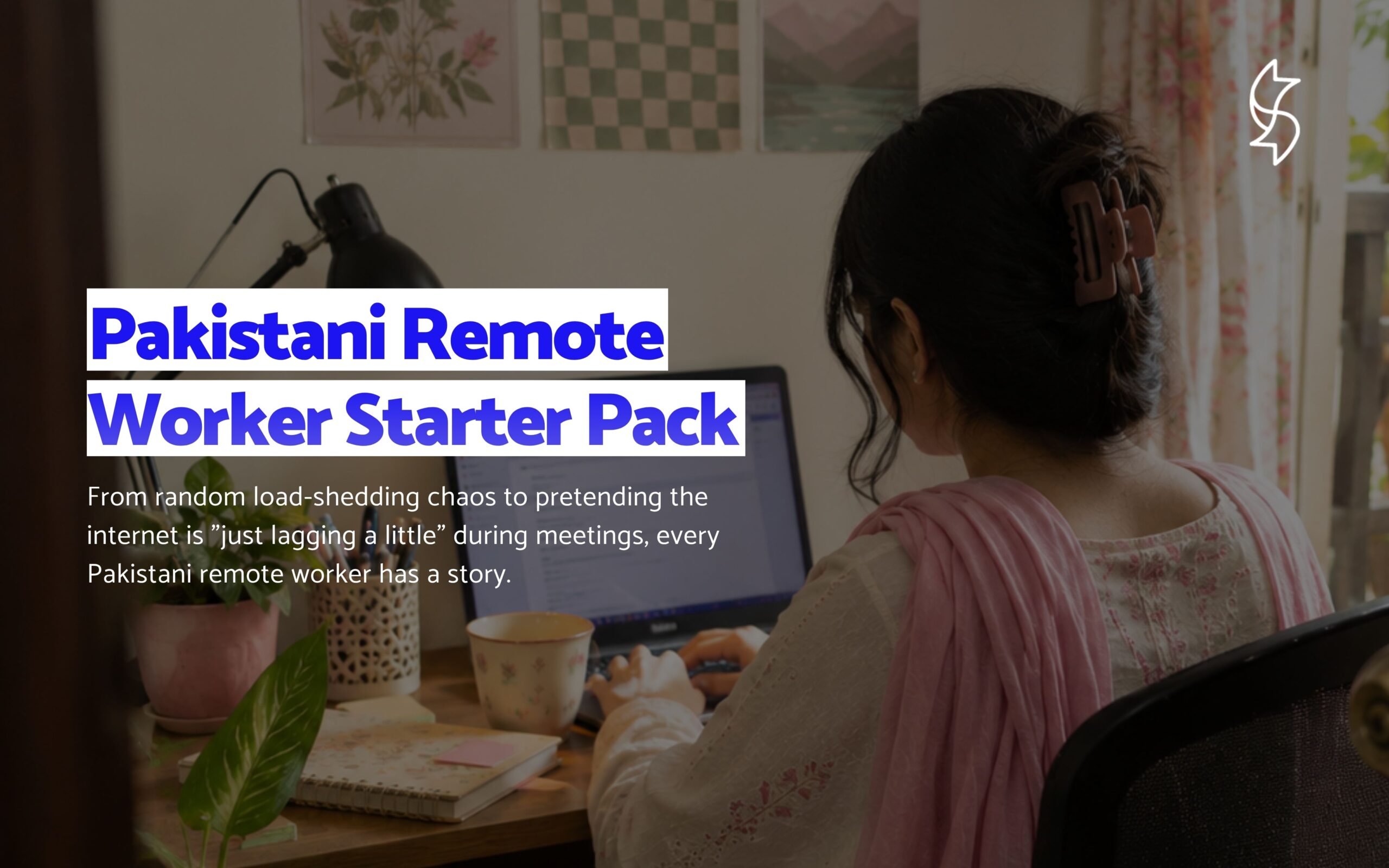
Pakistani Remote Worker Starter Pack (2026 Edition)

Remote work in Pakistan has officially become a lifestyle. From random load-shedding chaos to pretending the internet is “just lagging a little” during meetings, every Pakistani remote worker has a story. Whether you’re freelancing, working a remote corporate job, interning online, or trying to build a digital career, there’s one thing we all have in common: We’ve all attended a meeting while a pressure cooker, barking dog, or family discussion was happening in the background 😭 So here’s the unofficial Pakistani Remote Worker Starter Pack — funny, painfully accurate, and honestly… educational too. Pakistani Remote Worker Starter Pack 1. “Can you hear me now?” Internet Survival Skills A Pakistani remote worker knows internet troubleshooting better than some IT departments. Starter pack includes: 2. The Famous “Mute Yourself” Moment Every remote worker in Pakistan has experienced at least one of these: And somehow it always happens when your mic is unmuted. 3. The Load Shedding Olympics Nothing builds character like presenting a report while your battery is on 7%. Real Pakistani remote workers always have: Work from home in Pakistan isn’t just a job. It’s a survival game. 4. The “I’m Working” Explanation For some families, being at home means being available. Pakistani remote workers spend most of their time explaining: “Yes, I’m home.”“No, I’m not free.”“Yes, this is a real job.” 5. The Remote Worker Uniform Business on top. Pajamas at the bottom. 6. Chai = Productivity No motivational quote works harder than chai. Remote work starter pack in Pakistan: Some people use productivity apps. Pakistanis use tea. 7. “You’re Still on the Laptop?” One of the biggest struggles of remote work is that people think: Laptop = free time. Meanwhile you’re: 8. The Remote Work Glow-Up Jokes aside, remote work has changed lives in Pakistan. Students, freelancers, women, fresh graduates, and professionals now have access to: The future of work is digital – and Pakistanis are adapting fast. If you’re building your career online, learning digital skills, or searching for remote opportunities – keep going. Your WiFi may disconnect. Your laptop may lag. But your growth doesn’t have to.

Pakistani Remote Worker Starter Pack (2026 Edition) Read More »

Job Posting Scams in Pakistan: How to Spot Them and Stay Safe

Online job scams are on the rise across Pakistan. Fake recruiters are using WhatsApp, Instagram, Facebook groups, and Telegram to target job seekers with false promises of high-paying, easy work from home jobs. If you or someone you know is actively looking for employment, this guide will help you identify fraudulent job offers and protect yourself from financial loss.  Red Flags: How to Identify a Job Scam  Scammers follow predictable patterns. Watch out for these warning signs before accepting any job offer online:  How Job Scams Work: The Typical Process  Understanding the scam process can help you recognize it before it is too late. Here is how most fake job scams unfold:  How to Protect Yourself from Online Job Fraud  Always verify any job offer before responding. Follow these steps to stay safe: 

Job Posting Scams in Pakistan: How to Spot Them and Stay Safe Read More »

Why Scheduling “Do Nothing” Time is Important (And You Should Do It Too)

You wake up. Check your phone. Reply to emails. Attend meetings. Work on projects. Scroll LinkedIn. Read industry articles. Upskill. Network. Apply to jobs. Side hustle. Sleep. Repeat. When was the last time you did absolutely nothing? Not scrolling. Actually nothing. That’s the problem. The Productivity tip We’ve been sold a lie: Every moment should be optimized. If you’re not working, you should be learning. If you’re not learning, you should be networking. If you’re not networking, you should be exercising. If you’re not exercising, you’re wasting time. The result? A generation of people who feel guilty for doing nothing. This isn’t productivity. What “Do Nothing” Actually Means No notifications. No tasks. No optimization. Just you, with nothing to accomplish. Your brain isn’t a machine. It’s not meant to run 24/7. When you’re constantly consuming information or completing tasks, your brain operates in active mode. It processes, analyzes, stores, responds. But creativity and problem-solving happen in default mode — when your brain is idle. This is when: You can’t do this while scrolling or working. The hardest part isn’t doing nothing. It’s the guilt. You sit down with no agenda. Within minutes, your brain starts: “I should be working on that proposal.” “Everyone else is hustling right now.” “I’m wasting time.” Years of hustle culture, productivity content, and comparison have trained you to believe that doing nothing = falling behind. How to Actually Do It Step 1: Schedule It Treat it like a meeting. Put “Do Nothing” on your calendar. Start with 15 minutes. Yes, really. Fifteen minutes of sitting with no task. Step 2: Remove Distractions Phone in another room. Laptop closed. Step 3: Don’t Force It You don’t need to meditate. You don’t need to journal. You don’t need to “do it right.” This Isn’t Optional If you’re building a remote career, freelancing, or working, rest isn’t a luxury. Most people won’t do this. They’ll read this article, nod along, and then go back to optimizing every minute of their day. Because doing nothing feels unproductive. It feels like you’re wasting time. You don’t need an hour. You don’t need a perfect setup.

Why Scheduling “Do Nothing” Time is Important (And You Should Do It Too) Read More »
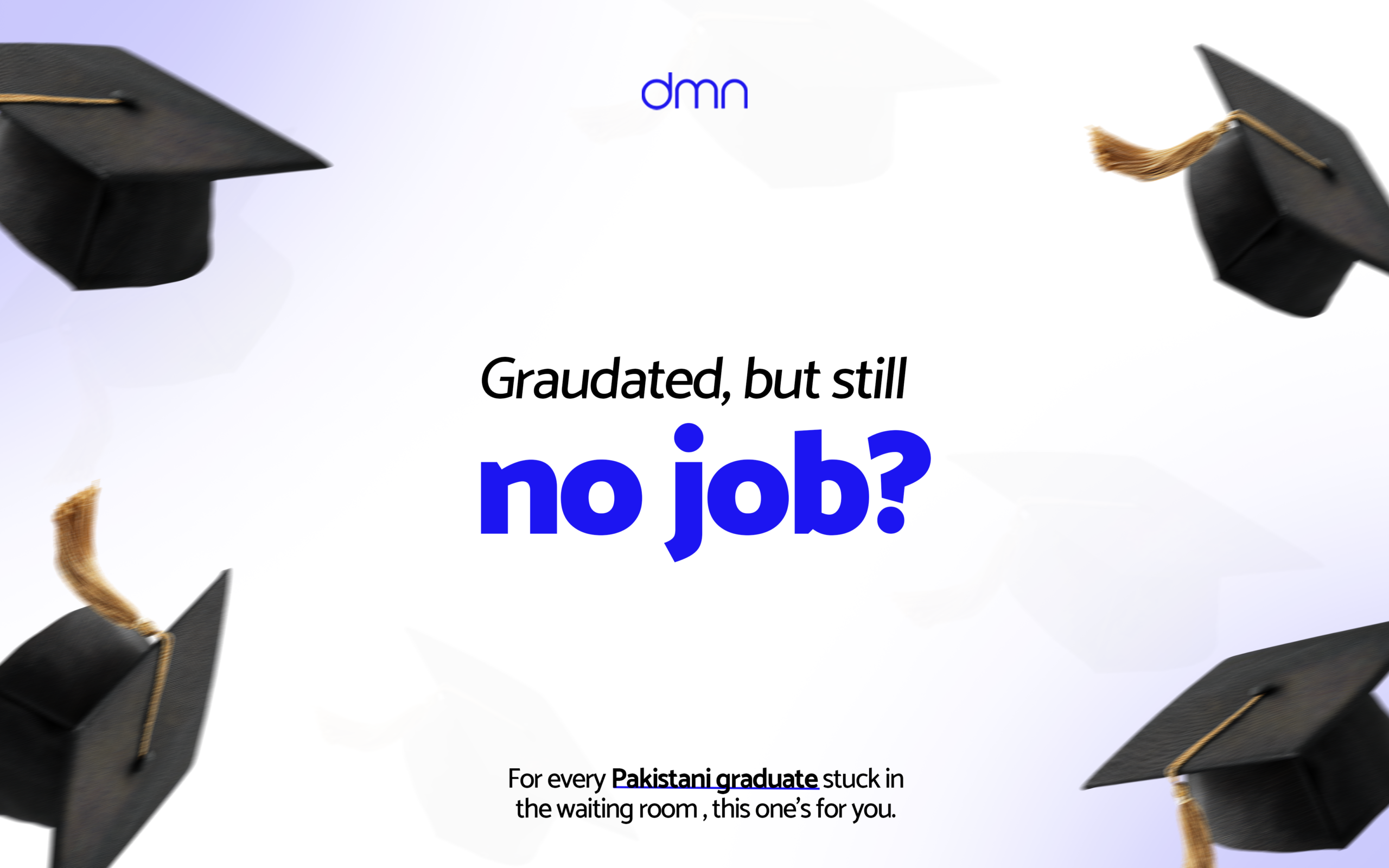
Graduated, but still no job?

You graduated six months ago. The celebrations are over. And you’re sitting at home, scrolling through job postings that all want “2-3 years of experience” for PKR 35,000. Your parents ask when you’re starting work. Your friends post LinkedIn updates. And you? You’re stuck. The Graduation Lie You were told: Get good grades → Get a degree → Get a job. Nobody mentioned the part where you graduate and then… nothing happens. “I have a CS degree. I’ve applied to 200 jobs. Three interviews. Zero offers.” This is the reality for thousands of Pakistani graduates every year. What Actually Happens What They Said Reality Your degree will open doors Doors want experience first Companies hire graduates They hire experienced graduates Apply to 100 jobs You apply to 500. Still nothing. The system isn’t designed for fresh graduates. It’s designed for people who already have jobs. Month 1-2: Optimistic. Applying daily. Month 3-4: Doubt creeps in. Did I waste four years? Month 7+: You consider taking any job. Even if it pays nothing. This isn’t failure. This is most Pakistani graduates. What You’re Doing Wrong Mistake #1: Waiting for the perfect job. There’s no perfect first job. Mistake #2: Only applying. Applying is passive. Building is active. Mistake #3: Blaming the degree. What Actually Works Build Proof Stop waiting for permission. Create your own. Nobody can reject a portfolio they can see. Apply Globally Local Job Remote Job Experience required Portfolio matters 2-hour commute Work from home Pakistani graduates land international clients daily. Not luck. Action. Upwork. Fiverr. Toptal. Fresh graduates with portfolios get hired. The 90-Day Reset Days 1-30: Build 3 portfolio pieces. Post them publicly. Days 31-60: Apply to 10 jobs daily. Local + international. Customize each. Days 61-90: Connect with 50 people in your field on LinkedIn. Engage genuinely. By day 90, you’ll have offers or direction on what to fix. Then actually build. Make it true. The Truth About Your First Job It probably won’t be what you dreamed of. It might pay less. It might be unrelated to your degree. It might feel like a step backward. Take it anyway. Why? Because a bad job beats no job for: What Matters Right Now Not your degree. Not your grades. Not how long you’ve been waiting. What you do now. The waiting room isn’t permanent. But you have to walk out yourself.

Graduated, but still no job? Read More »

The Boring Skill That’s Making Freelancers Thousands Every Month

Nobody talks about it. Everyone needs it. There’s a pattern among Pakistani freelancers who quietly earn well without being developers, designers, or marketers. They do something most people find dull. Repetitive, even. Something that doesn’t make for a great story at a dinner party. They manage numbers. Organize data. Keep financial records clean and accurate. In other words — bookkeeping and accounting. And the market for it? Enormous. Why Nobody talks about it? Bookkeeping doesn’t have the glamour of UI design or the cool factor of software development. Nobody makes YouTube videos about their bookkeeping journey. It doesn’t trend on LinkedIn. But here’s what does happen quietly, every single month: Small business owners in the US, UK, and Canada wake up stressed about their finances. Their books are a mess. They don’t understand where their money went. They need someone reliable, affordable, and competent to fix it. They find a Pakistani freelancer on Upwork. They hire them. They pay well. They come back every month. What the Work Actually Looks Like Bookkeeping remotely isn’t complicated work. It’s consistent work. And consistency is exactly what clients pay a premium for. A typical day might involve: The Numbers Experience Level Monthly Earnings Beginner (0-1 year) $500 – $900 Intermediate (1-3 years) $1,000 – $2,500 Experienced (3+ years) $2,500 – $5,000+ The higher end isn’t fantasy. Bookkeepers who specialize — in e-commerce, real estate, or SaaS businesses — regularly charge $50-$80 per hour on platforms like Upwork. Why Pakistani Professionals Are Naturally Good at This Pakistan has a strong tradition of finance and accounting education. ACCA, CA, and commerce degrees are common. The country produces thousands of finance graduates every year who end up underemployed locally. The global remote market is the correction to that mismatch. A fresh commerce graduate who learns QuickBooks and Xero can start earning internationally within months. Not years. Months. The Tools You Need to Learn QuickBooks Online — The industry standard in the US and Canada. Most small businesses use it. Xero — Popular in the UK, Australia, and New Zealand. Cleaner interface, growing fast. Microsoft Excel — Still the foundation of everything. Master it. The Certification Advantage Unlike design or writing, bookkeeping has certifications that clients actively look for. QuickBooks ProAdvisor — Free. Recognized globally. Adds credibility immediately. Xero Advisor Certified — Free. Widely respected in UK and Australian markets. ACCA or CA qualification — If you already have it, you’re ahead of most freelancers globally. These aren’t just badges. They’re proof that you know what you’re doing. The Retention Factor Here’s what makes bookkeeping different from most freelance work: Clients don’t switch. Once a business owner finds a bookkeeper they trust, they stick with them. The relationship is monthly. The income is recurring. You’re not constantly chasing new clients the way a designer or writer might be. Three or four long-term clients can comfortably replace a full-time local salary. Who This is For Fresh commerce or finance graduates who feel stuck in a slow local job market. Accountants in local firms earning well below their potential. Anyone with basic numeracy skills willing to learn and build a profile. This isn’t a skill for everyone. If you hate numbers, don’t force it. But if you’ve always been comfortable with spreadsheets and financial data, this might be the most practical path to international income that nobody in your circle is talking about. How to Start Week 1-2: Learn QuickBooks Online. Use the free trial. Watch tutorials. Get familiar with the interface. Week 3: Get the free QuickBooks ProAdvisor certification. Week 4: Set up an Upwork profile. Position yourself as a bookkeeper for small businesses. Start with lower rates to build reviews. Month 2-3: Land first client. Deliver well. Ask for a review. Raise rates. Month 4-6: Build to 2-3 recurring clients. The Honest Reality Bookkeeping isn’t passive income. It requires attention to detail, reliability, and communication. Clients are trusting you with sensitive financial data. That’s a responsibility. But it’s also why they pay well. And why they stay. The freelancers who treat bookkeeping seriously — who show up consistently, communicate clearly, and deliver accurate work — build some of the most stable freelance incomes out there. Not the most exciting story. But one of the most financially sound ones.

The Boring Skill That’s Making Freelancers Thousands Every Month Read More »

Breaking the 9-to-5: How Women in South Asia Are Redefining Work

For most women in Pakistan, the career path came pre-written. Degree. Job. Marriage. Choose one or figure out how to balance all three. The 9-to-5 wasn’t just a schedule — it was the only format that felt acceptable. That format is breaking down. And women are the ones breaking it. The Old Way Long commutes through the cities. Office environments that weren’t always supportive. Salaries that didn’t reflect the work. And the permanent negotiation between ambition and expectation. What Actually Changed Everything It was an internet connection and the realization that a client in Toronto doesn’t care about your commute time. Remote work gave women in South Asia three things the traditional workplace never did: What They Got What It Replaced Work from home 2-hour daily commutes Dollar income Rupee salary ceilings Who These Women Are They are not all from Karachi or Lahore. They are not all from privileged backgrounds. They don’t all have fancy degrees or connections. What they have in common: A graphic designer in Multan building brand identities for UK startups. A content writer in Faisalabad managing three American editorial calendars. A virtual assistant in Islamabad running a Canadian e-commerce business from her apartment. None of them asked for a seat at the table. They opened their laptops and built their own. The Numbers Don’t Lie Pakistani women are among the fastest-growing segment of freelancers on platforms like Upwork and Fiverr. $500M+ earned by Pakistani freelancers annually — and women are a growing part of that number. Let’s Not Pretend It’s Easy The barriers haven’t disappeared. They’ve just changed shape. Unreliable internet in smaller cities. Family resistance to non-traditional work. The loneliness of working without a team. Figuring out how to receive, manage, and grow dollar income with zero guidance. The Ripple Effect This is where it gets interesting. When one woman in a family figures out how to earn internationally from home, it doesn’t stay with just her. Her younger sister watches. Her cousin asks questions. Her neighbor wants to know how she did it. One woman doing it differently becomes ten women believing it’s possible. What This Generation Is Building A career that fits their life — not a life squeezed around a career. Remote work didn’t fix the system. But it gave women a way to work around it — and succeed despite it.

Breaking the 9-to-5: How Women in South Asia Are Redefining Work Read More »

Why Global Companies Are Turning to Pakistani Talent for Remote Work

The remote work revolution has dissolved borders, and one country is quietly becoming a powerhouse in the global talent marketplace: Pakistan. While companies from Silicon Valley to London search for skilled professionals, they’re discovering that some of their best hires are coming from Pakistan. The Skills That Travel Pakistani professionals have carved out strong niches in fields where remote work thrives. Software developers fluent in Python, React, and cloud technologies are building products for startups worldwide. Digital marketers are running campaigns across time zones. Graphic designers and UI/UX specialists are shaping brands they’ve never seen in person. Virtual assistants keep businesses organized from thousands of miles away, while finance professionals manage books and payroll for companies they’ll never visit. What makes these skills particularly exportable isn’t just technical competence—it’s the combination of expertise with adaptability. Pakistani professionals have become adept at working across cultural contexts, adjusting to different communication styles, and delivering quality work regardless of geographic distance. The Competitive Edge Several factors explain why global companies are increasingly looking to Pakistan for remote talent. English proficiency is widespread, eliminating one of the biggest barriers to international collaboration. The time zone sits conveniently between East Asian and European hours, allowing for overlap with both markets. And perhaps most importantly, the cost-efficiency is compelling—companies can access top-tier talent at rates that make economic sense for startups and established businesses alike. But it’s more than just economics. Pakistani professionals bring a work ethic shaped by a competitive local market and a genuine hunger to prove themselves on the global stage. They’re willing to go the extra mile, stay flexible with schedules, and commit to long-term partnerships. Industries Leading the Charge Information technology and software development remain the strongest sectors, with Pakistani developers contributing to everything from mobile apps to enterprise solutions. Marketing agencies worldwide tap into Pakistani talent for social media management, content creation, and SEO expertise. Customer support teams increasingly include voices from Pakistan, trained to handle complex queries with patience and professionalism. Even specialized fields like data analytics and financial services are seeing Pakistani professionals make their mark. A New Chapter in Global Work This isn’t outsourcing in the traditional sense—it’s a genuine integration of talent across borders. Pakistani professionals aren’t just filling gaps; they’re bringing innovation, reliability, and fresh perspectives to global teams. As remote work continues to reshape how companies think about hiring, the question isn’t whether to look beyond traditional talent pools, but how quickly companies can adapt to this new reality. For businesses seeking skilled, dedicated, and cost-effective remote workers, Pakistan has emerged as more than just an option—it’s becoming a destination of choice.

Why Global Companies Are Turning to Pakistani Talent for Remote Work Read More »

How to Negotiate Your Salary When You’re Just Starting Out

For South Asian talent landing their first global gig You just got the offer from an international company. Congratulations. Now comes the hard part: they want to know your salary expectations, and you have no idea what to say. Ask too high and they might walk away. Ask too low and you’ll spend the next year resenting yourself for leaving money on the table. Here’s what you need to know about negotiating your first global salary. Know Your Numbers Before any negotiation, understand what the market actually pays. Entry-level developers working remotely for global companies typically earn $800-$1,500 per month. Designers make $600-$1,200. Writers get $500-$1,000. Virtual assistants earn $400-$800. Compare this to local Pakistani rates, which are usually 3-5 times lower, and you’ll understand why negotiation matters. These aren’t inflated numbers. These are real rates that Pakistani freelancers and remote workers earn right now. Don’t anchor yourself to local salaries just because that’s what you’re used to seeing. Never Give a Number First This is the golden rule. Whoever mentions money first loses negotiating power. When they ask about your salary expectations, flip it back to them. Ask what budget range they have in mind for the position, or say you’d like to understand the full scope of responsibilities before discussing compensation. Most hiring managers expect this. They’re not offended by it. You’re showing that you understand how negotiations work, which actually makes you seem more professional, not less. When You Must Name Your Price Sometimes they won’t budge until you give a number. When this happens, do your homework first. Check what similar roles pay on platforms like Glassdoor or in freelancer communities. Calculate your absolute minimum, the least you can accept while covering expenses and saving something. Then add 20-30% to that number. If your minimum is $600, ask for $750-$900. Give it as a range, not a fixed number. They’ll likely offer somewhere in the lower half of your range, which is why your range’s bottom should be close to what you actually want. Avoid this The biggest mistake Pakistani talent makes is converting everything to rupees and getting excited too quickly. You see an offer for $400 and think “that’s PKR 112,000, way more than I make locally!” so you accept immediately. Stop. You’re not competing with local wages anymore. You’re in the global market. That US company would pay someone locally $4,000-$5,000 for the same role. At $400, you’re giving them a 90% discount. At $1,000, you’re still saving them thousands while earning what your skills are actually worth internationally. How to Counter an Offer They offer $600. You wanted $900. Don’t just accept it or reject it. Negotiate. Thank them for the offer, express genuine interest in the role, then explain that based on your skills and market rates, you were expecting closer to $850-$900. Ask if there’s flexibility in the budget. Three things usually happen. They agree and offer $800. They say the budget is fixed but offer a performance review in some months. Or they make a smaller increase to $650 and call it final. Your move depends on whether the experience is worth it at that rate. Know When to Walk Away Some offers aren’t worth negotiating. If they promise to “pay more later” but won’t put it in writing, walk. If they want 60+ hours a week for entry-level pay, that’s exploitation. If they refuse to discuss salary at all, that’s a red flag about how they’ll treat you as an employee. The Confidence Issue You’re thinking “but I have no experience, how can I negotiate?” Here’s the truth: they offered you the job because you have skills they need. Entry-level means you’re at the start of creating value. Will they reject you for negotiating? Maybe. If they do, it wasn’t the right fit anyway. Companies that respect talent expect negotiation. A Simple Script When they make an offer, take 24 hours to think about it. Then respond: “Thank you for the offer. I’m excited about joining the team. Based on my skills in [specific areas] and current market rates, I was expecting something in the range of $[X]-$[Y] per month. Is there flexibility to discuss this?” That’s it. Professional, confident, not aggressive. Most reasonable companies will either meet you closer to your number or explain their constraints. What Actually Matters You’ll probably mess up your first negotiation. Most people do. You’ll ask too low, or too high, or forget to negotiate entirely. That’s fine. You learn by doing. Your second negotiation will be better. Your third will be easier. By your fifth, you’ll wonder why you were ever nervous about it. Pakistani talent is competing globally and winning. You’re getting hired because you’re good at what you do. Remember that when you negotiate.

How to Negotiate Your Salary When You’re Just Starting Out Read More »

When Your Home Becomes Your Office (and Why That’s Hard)

Working from home sounds like a dream. No commute, flexible hours, and you can stay in your PJs all day… right? The reality, however, often feels very different. For many people, turning your home into your office is more challenging than it looks. The Line Between Work and Life The biggest struggle? Boundaries. At the office, it’s easy to “clock out” and leave work behind. At home, your laptop might be a few steps from your bed, your phone constantly pings, and suddenly your workday seems endless. Without clear boundaries, even small tasks can take over your day. Productivity Isn’t Automatic Just because you’re at home doesn’t mean you’re automatically more productive. Without structure, it’s easy to get distracted by chores, social media, or even your favorite TV show. On the flip side, some people work longer hours because there’s no one around to say “time’s up.” The Social Isolation Factor Humans are social creatures. Offices provide casual conversations, teamwork, and small social interactions that make the day feel lighter. At home, you might miss out on that connection, which can impact motivation and creativity. Setting Up for Success So how can you make remote work more manageable? Embracing the Challenge Yes, working from home is hard. But it also offers flexibility and independence that traditional jobs can’t match. The key is acknowledging the difficulty, planning around it, and building habits that keep you productive. Remote work isn’t perfect. But with the right mindset and strategies, your home office can become a space that supports both your career and your life.

When Your Home Becomes Your Office (and Why That’s Hard) Read More »

Book a Demo Interview

Demo Interview RS. 3570 4200
Practice, get feedback, and ace your next interview.

Submit your CV

Resume Review RS. 2380 2800
Get expert eyes on your CV and land more interviews.

After submission, you’ll get an email for payment and confirmation.