


Entertainment

Lets Stop Forgetting The Menstrual Health Crisis In Pakistan

There is a curtain of silence surrounding a common and natural occurrence in Pakistani society, which is menstruation. In Pakistan, girls are not only denied access to vital information about their bodies but also detrimental taboos related to menstruation health education. It’s time to end this silence, promote education on period hygiene, and guarantee that girls all throughout the nation have access to sanitary goods. Like many other countries, Pakistan has long struggled with cultural taboos related to menstruation. The stigma and secrecy around menstrual health frequently result in stigmatisation and false information. This cultural silence prevents the development of positive attitudes about menstruation and puts up a barrier to candid conversations about reproductive health. Image Source: arabnews.pk Breaking the taboo around menstruation health is the first step towards empowerment. Menstruation de-stigmatization efforts must to be rolled out in homes, communities, and educational institutions. It is possible to dispel myths, dispel prejudices, and foster an atmosphere where girls feel free to talk about their bodies without feeling ashamed or afraid by having frank and honest discussions about menstruation. A comprehensive teaching approach is necessary to address taboos surrounding menstruation health. Age-appropriate menstrual health education should be incorporated into school curricula to give girls accurate information about their bodies and the changes they will undergo. We can help bring about a societal shift that acknowledges the normal and healthy aspects of this biological process by normalising conversations about menstruation. Not only should fallacies about menstrual hygiene be debunked, but females should also be taught the value of practicing proper cleanliness throughout their periods. It’s important to teach girls the value of cleanliness and good sanitation practices because poor hygiene can result in a number of health problems. Beyond the classroom, females in underprivileged neighbourhoods and rural areas should receive this education. Another essential component of teaching on menstrual health is access to sanitary supplies. Girls in many parts of Pakistan struggle to get period products that are both economical and clean. Access to reusable and environmentally friendly sanitary products is a key component of initiatives aimed at preventing girls from being denied an education because they lack menstruation hygiene supplies. Governmental agencies, non-governmental organisations, and neighbourhood groups ought to work together to create initiatives that provide sanitary goods to communities and schools. These programmes can also teach girls about menstruation product safety—how to use and dispose of them properly, and how important it is to choose products that are safe for both the environment and their bodies. Innovative approaches like community-based seminars, awareness campaigns, and collaborations with nearby health facilities can fill the gap in rural areas where resources may be scarce. We can create a culture that values menstruation health as a vital component of overall wellbeing by including the community. Image Source : Freepik.com It’s critical to understand that menstrual health education aims to empower girls by addressing their feelings of empowerment in addition to the practical issues of menstruation. Girls can better pursue their education and reach their full potential when they have an understanding of their bodies, have access to resources, and are not restricted by cultural taboos. To sum up, educating girls in Pakistan about menstruation health is essential to breaking down social stigmas, encouraging good hygiene, and guaranteeing that they have access to sanitary goods. By ending the taboo around menstruation, we can give girls the confidence and dignity to handle this normal part of life. We can build a future where menstruation is accepted as a normal and healthy aspect of every girl’s journey to maturity via activism, education, and community involvement.

Lets Stop Forgetting The Menstrual Health Crisis In Pakistan Read More »
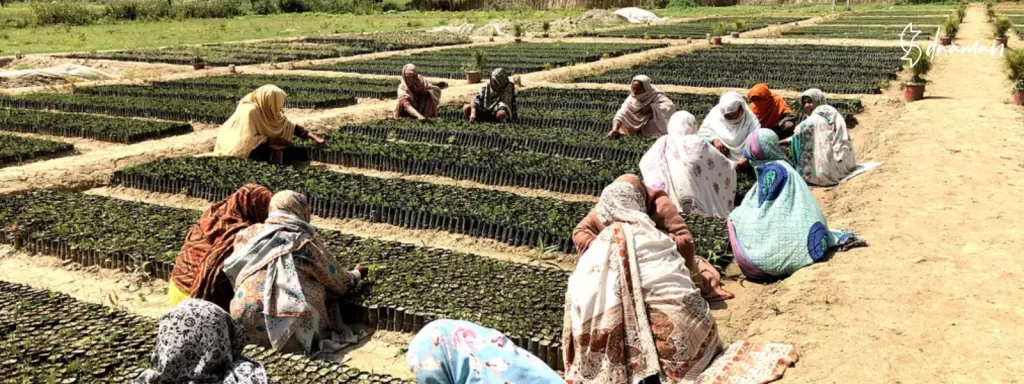
Women’s Integral Role in Transforming Pakistan’s Agriculture

Women have become unsung heroes in the middle of Pakistan’s agricultural landscape, significantly influencing the agricultural sector’s course. Their efforts, which have hitherto been overlooked and underappreciated, have been crucial in promoting resilience, accelerating innovation, and changing the agrarian economy. Busting Preconceptions: In Pakistan’s past, agriculture was thought to be a field dominated by men, with women only allowed to handle home duties. Nonetheless, a paradigm change has been observed in recent years as more women actively enter the agricultural field. Women all around the nation are defying gender stereotypes and actively participating in all aspects of farming, taking on careers outside the house. Image Source: Freepik.com Working in the fields is one important way that women support Pakistani agriculture. Women are involved in labor-intensive tasks that are essential to agricultural output, from planting seeds to harvesting crops. Women and men are often observed working together to cultivate a variety of crops in Punjab and Sindh, including cotton, sugarcane, and wheat. Entrepreneurship and Agribusiness: Beyond the confines of traditional vocations, Pakistani women are progressively launching their own businesses and making contributions to the agricultural industry as agri-entrepreneurs. An increase in women-owned farms, poultry companies, and dairy farms is indicative of this change. These women are creating economic growth in their communities and safeguarding their own lives by embracing new farming practices and expanding their agricultural operations. Technology and Education Accessible: More access to technology and knowledge is directly related to women’s empowerment in agriculture. Women are more capable of making educated decisions, putting sustainable farming techniques into practice, and increasing productivity when educational efforts centred around agricultural practices and technology are implemented. With the introduction of mobile technology, women farmers now have even more power as they can now access weather forecasts, market data, and best practices for farming. Social Impact and Community Building: Women in agriculture frequently have a significant impact on social impact and community development. Through joint efforts such as women-led agricultural cooperatives, they pool resources, expertise, and assistance. These cooperatives improve agricultural output and foster socioeconomic growth, which benefits not only individual women but entire communities. Obstacles and Fortitude: Women in agriculture confront a number of obstacles despite their enormous contributions, such as restricted access to resources, unequal land rights, and insufficient funding. But as they get over these challenges, their tenacity comes through, showing that they’re determined to shatter down boundaries and make significant contributions to the agriculture industry. Image Source : Freepik.com The Pakistani government has launched a number of initiatives to support and develop women farmers in recognition of the critical role that they play in the agricultural industry. These programmes include lending facilities, training, and advocating for laws that level the playing field for women and men in the agriculture industry. NGOs and advocacy groups are also putting out a lot of effort to support the rights of women in agriculture and to raise the voices of these women. Pakistani women who work in agriculture are not just contributors; they are also innovators who are reshaping the country’s agricultural environment. There is no denying that women in agriculture are having a revolutionary impact as they access education and technology, challenge conventional gender roles, and create resilient communities. Their contributions are essential for both economic expansion and food security, and they also open the door for Pakistan’s agriculture to become more inclusive and sustainable in the future.

Women’s Integral Role in Transforming Pakistan’s Agriculture Read More »

Book a Demo Interview

Demo Interview RS. 3570 4200
Practice, get feedback, and ace your next interview.

Submit your CV

Resume Review RS. 2380 2800
Get expert eyes on your CV and land more interviews.

After submission, you’ll get an email for payment and confirmation.